
Classical Education in the Modern World
“Education is not a subject… it is instead a transfer of a way of life.”
— G.K. Chesterton
There is now enough data for reasonable hope that the return of classical education is not a short-lived trend. It is becoming a concrete response to a deep cultural need.
In the United States, and to a more modest extent in Canada, classical education has moved from the margins into a serious and expanding alternative to modern public education. It now includes private schools, Christian schools, Catholic schools, public charter schools, homeschooling networks, hybrid schools, microschools, teacher-training institutions, curriculum publishers, conferences, journals, and even alternative college-admissions testing.
A recent market analysis found that during the 2023–2024 school year, roughly 1,551 classical schools in the United States served approximately 677,521 students. The same analysis projects that classical education could grow to approximately 2,500 schools and 1.4 million students by 2035. Public charter schools account for roughly 18% of current classical education enrollment, with the remainder found in private schools, homeschools, hybrid schools, and microschools.
These numbers are significant. They show that classical education is not a small enclave of homeschoolers, private-school parents, or enthusiasts of Latin and the Great Books. It has become an identifiable movement within the wider educational landscape. And it takes only a small and committed portion of a population to make a significant difference in cultural tastes and priorities.
A Recovery That Began Quietly
Its intellectual roots are often traced to Dorothy Sayers’ 1947 essay, “The Lost Tools of Learning,” which argued for the recovery of the Trivium — grammar, logic, and rhetoric — as the foundation of education. But the practical revival began in earnest in the 1980s and 1990s.
Around 1980–1981, several schools emerged independently with similar instincts: Trinity School in Indiana, Cair Paravel School in Kansas, and Logos School in Idaho. These schools sought to recover a trivium-based education at a time when progressive educational methods had become dominant in many institutions.
In 1991, Douglas Wilson’s Recovering the Lost Tools of Learning helped galvanize the classical Christian school movement. By 1994, the Association of Classical & Christian Schools — commonly known as ACCS — had been founded to connect and support these schools. Today, ACCS represents more than 500 member schools serving approximately 68,000 students.
Other institutions soon followed. The CiRCE Institute, founded in 1996, became influential in teacher formation, conferences, and classical pedagogy. The Society for Classical Learning now reports more than 500 schools in its network. The Classical Latin School Association has also played an important role, particularly among Catholic classical schools seeking accreditation and curricular seriousness.
What began as scattered local efforts has become a coordinated movement.
The Growth of Classical School Networks
Some of the most visible growth has occurred through organized school networks.
Great Hearts Academies, founded in 2003, has become one of the best-known public charter school networks using a classical liberal arts model. It now operates approximately 47 academies across Arizona, Texas, and Louisiana, serving roughly 30,000 students.
Hillsdale College’s Barney Charter School Initiative began in 2012 and has also become a major force in public classical education. By the 2023–2024 school year, Hillsdale supported 20 member classical charter schools across nine states, enrolling approximately 11,600 students, with a reported waitlist of nearly 5,000.
Classical Conversations, founded in 1997, has become one of the largest classical homeschooling networks in the world. It now serves more than 45,000 families across all 50 U.S. states and approximately 30 countries.
The significance of these figures show that classical education is becoming institutionally durable. It is no longer dependent only on isolated families or small private schools. It now has networks, training structures, curriculum systems, conferences, accreditation bodies, and public-policy relevance.
Texas, Charters, and the Demand for Alternatives
The rise of classical charter schools is especially noteworthy.
In Texas, classical charter enrollment grew from approximately 3,000 students in 2011 to about 20,000 students in 2021 — nearly a sevenfold increase. Over the same period, the broader charter sector in Texas only doubled. That contrast is important. It suggests that classical education is not merely riding the general charter-school wave; it is outpacing it in certain markets.
Parent satisfaction data is also notable. In surveyed Texas classical charter schools, 64% of parents reported being “very satisfied,” while another 28% reported being “satisfied.” More than 90% expressed satisfaction with how well their child’s school provided instruction in character and values.
This matters because it confirms what many parents already sense: the appeal of classical education is not merely academic. Parents are not only seeking higher test scores or better college placement. They are seeking moral seriousness, cultural coherence, disciplined learning, and character formation.
They are seeking an education that understands the child as a whole person.
The Role of School Choice
The growth of classical education has also been assisted by school-choice policies.
Classical charter schools have expanded in states with favourable charter laws. Education savings accounts, vouchers, scholarship programs, and tax-credit systems have made private and hybrid classical education more accessible to families who otherwise could not afford it.
The research materials note that the number of students participating in Education Savings Account programs increased from approximately 40,000 in 2022 to nearly 500,000 in more recent data. This is a major policy shift. If parents are given greater control over educational funds, many choose institutions that offer structure, tradition, discipline, and moral clarity.
It has become obvious that many parents have lost confidence in educational systems that appear increasingly unable or unwilling to transmit cultural inheritance. When given meaningful choice, they often look for schools that take truth, virtue, beauty, history, and citizenship seriously.
Classical education benefits from that dissatisfaction because it offers a coherent alternative.
Higher Education and the Wider Cultural Moment
The classical revival is not limited to K–12 education.
Its influence is increasingly visible in higher education, teacher training, publishing, admissions testing, and public debate. Great Books colleges such as St. John’s College, Thomas Aquinas College, and the University of Dallas have long preserved parts of the older tradition. But the movement now reaches beyond those institutions.
Hillsdale College has become one of the most visible institutional supporters of classical education, particularly through its K–12 curriculum and charter-school work. Its American history and civics materials, including the “1776 Curriculum,” are offered free to teachers and schools.
Baylor University has supported classical education through Principia: A Journal of Classical Education. Other institutions and programs have contributed through honors colleges, great texts programs, liberal arts initiatives, and teacher formation.
The Classical Learning Test — the CLT — is another example of classical education entering the mainstream. It was developed as an alternative to the SAT and ACT, with a stronger emphasis on classical, literary, philosophical, and religious texts. By 2023, Florida had adopted the CLT for certain state scholarship purposes, and the test had gained recognition among numerous colleges and universities.
This development has been controversial, as expected. Critics argue that classical education overemphasizes Western and biblical sources, or that it reflects conservative or religious priorities. But the controversy itself proves the point: classical education is no longer invisible. It has become important enough to debate.
Challenges
The revival of classical education is not without real challenges.
Some critics raise concerns about elitism, ideological bias, cost, and limited diversity. These critiques should not be dismissed. Many classical schools are private or religious, and tuition can exceed $10,000 per year, placing them beyond the reach of many families. Classical education also often draws from Greco-Roman, Christian, and Western sources, which critics sometimes characterize as too narrow or exclusionary.
There are also practical challenges. Classical schools require serious teachers. They require intellectual formation, not merely classroom management. A school cannot simply add Latin, uniforms, and a few Great Books and call itself classical. If the teachers themselves are not formed in the tradition, the result can easily become aesthetic imitation rather than genuine recovery.
There are also legitimate questions about evidence. Are classical schools succeeding because of the model itself, or because motivated families self-select into them? How should outcomes be measured? Standardized tests do not capture virtue, eloquence, judgment, or wisdom. Yet schools still must be academically accountable.
These are real questions. But they do not weaken the case for classical education. Rather, they show that the movement is maturing. Any serious educational movement must face questions of scale, access, teacher quality, cost, and fidelity to mission.
As classical education becomes more popular, it risks becoming a brand rather than a tradition. It risks being reduced to a marketing label used by schools that offer the appearance of seriousness without the substance.
Accessibility and the Public Domain
One of the great strengths of classical education in the modern world is that its core materials are more accessible than ever.
The foundational works of Western civilization are not locked away in elite institutions. Homer, Plato, Aristotle, Cicero, Virgil, Augustine, Dante, Shakespeare, Milton, Locke, Burke, and many others are available freely or inexpensively through public-domain resources.
Project Gutenberg, Internet Archive, LibriVox, AmblesideOnline, Hillsdale’s free curriculum materials, and numerous open educational resources have lowered the financial barriers to entry. A family with seriousness, discipline, and guidance can begin without enormous expense.
This is especially important because classical education is often accused of being elitist. Historically, it was sometimes restricted to elites. But that is not inherent to the tradition. The deeper purpose of classical education is not to produce a caste, but to form human beings capable of truth, virtue, judgment, and responsible freedom.
Why Parents Are Returning
The question remains: why now?
Why is classical education experiencing a renaissance in the modern world?
The answer is not complicated. Many parents can see that something has gone wrong.
They see declining literacy and ideological fads. They see schools often shying away from moral clarity while still teaching moral assumptions. They see students who know little history, read little literature, and possess little cultural memory. They see children trained for tests, screens, and careers, but not for wisdom, virtue, or the good life.
Classical education offers something different as it offers coherence, high standards, formation and seriousness lacking in other modern schools. This does not mean that every classical school is excellent. There are faithful teachers in many settings. There are serious public schools and mediocre classical schools. But at the level of educational philosophy, classical education has a clear advantage: it knows what education is for.
A Serious but Modest Hope
We should be neither naïve nor despairing. Classical education will not, by itself, restore the West. It cannot recreate the cultural conditions that once made the tradition more natural and coherent. We are working among fragments, but classical education acknowledges that the fragments matter.
A child who reads Homer learns something about courage, wrath, honour, and mortality. A child who reads Virgil learns something about duty and sacrifice. A child who studies Euclid encounters order. A child who reads Augustine sees the drama of sin, restlessness, and grace. A child who studies Scripture encounters divine truth. A child trained in grammar, logic, and rhetoric learns to receive, reason, and speak.
The modern classical education movement matters because it represents a conscious refusal to surrender the inheritance entirely. It is an attempt, however imperfect, to recover the lost tools of learning, the Great Conversation, the moral imagination, and the cultural memory of the West.
Classical Education Requires Humility Among the Ruins
“Remove not the ancient landmark, which thy fathers have set.” — Proverbs 22:28
Taking Stock of The Situation
A serious discussion of classical education must begin with an honest assessment of where we stand as a culture in the West, and particularly, the English-speaking West.
We do not inhabit a culture that confidently transmits its inheritance. Those that still hold traditional culture often do so apologetically, and privately.
We do not possess a unified moral language, a shared canon, or a widely understood standard of excellence. What was once common knowledge has become specialized and macerated. What was for centuries contested, in many cases, has been forgotten.
The classical tradition has not disappeared entirely. Its texts remain, its influence lingers, and its vocabulary survives in fragments. But the living continuity that once sustained it has been broken.
The Loss of Cultural Continuity
Classical education depended not only on books, but on a culture that understood those books.
Students once encountered Homer, Plato, Virgil, and Augustine within a broader framework of shared references, assumptions, and moral expectations. Teachers were themselves formed within the tradition they transmitted. Language, liturgy, law, and literature reinforced one another.
That coherence no longer exists. In the words of Yeats, “things fall apart, and the centre cannot hold.”
Today, students approach the classical texts without the cultural scaffolding that once made them intelligible. The language can be unfamiliar and overwrought. The assumptions are distant or hypothetical. The moral vision can be at odds with prevailing norms, and not embodied in any concrete examples.
In other words, we possess the artifacts of a tradition but not the conditions necessary to sustain it as it has existed.
The Absence of Exemplars
A further difficulty, and as alluded to above, is the scarcity of living examples.
Any parent knows that virtue cannot be transmitted by instruction alone. It requires embodiment. Courage, discipline, humility, honesty, and perseverance are mere abstractions if they cannot be shown to exist in our communities, and to “work” as a model for acting in the world.
In earlier periods, such examples were more readily available—within families, communities, institutions, and public life. Today, they are less visible and less consistently reinforced.
We cannot assume that students will encounter models of ordered life simply by participating in contemporary culture. In most cases, the opposite is true.
This places a much heavier burden on parents and educators than it ever has in the past. It also demands a higher degree of intentionality.
The Limits of Recovery
It would be comforting to believe that what has been lost can be fully restored. It cannot.
We do not have a Plato. We do not have an Augustine. We do not have a culture that instinctively reveres its inheritance or understands its own foundations. Even where interest in classical education is growing, it often exists as a countercultural effort rather than a widely shared norm.
This recognition is not a cause for despair. If we understand our starting position, we can better map out the future. Yes, we are working with fragments. Yes, our understanding is partial. Our transmission will be imperfect, and this is acceptable. Humility is a great starting point for our endeavor, and will serve as an example to our students.
Why Humility Matters
“For now we see through a glass, darkly.” — 1 Corinthians 13:12
To approach classical education without humility is to risk turning it into an aesthetic preference or an ideological project. This must be resisted at every turn.
A humble approach recognizes:
That we are recipients before we are teachers
That we understand only in part
That formation is slow and often uneven
That the tradition we seek to recover is greater than our grasp of it
Such humility guards against both arrogance, discouragement, and future disappointment. It allows us to proceed without illusion.
Beginning Where We Are
If we cannot fully restore what has been lost, what can we do?
We can begin.
We can read what remains. We can study seriously. We can introduce our children to the great works, even if our own understanding is incomplete. We can cultivate habits of attention, discipline, and reverence for what is good and true.
We can rebuild, not from a position of strength, but from a position of responsibility.
Education, in this sense, becomes an act of stewardship. We receive what we can, preserve what we understand, and pass it on—however imperfectly—to those who come after us.
This is a patient work of recovery.
The Role of the Family
“And these words… thou shalt teach them diligently unto thy children.” — Deuteronomy 6:6–7
In the absence of a unified educational culture, the responsibility for transmission returns, in large part, to the family.
Institutions and schools matter greatly. But they cannot replace the formative influence of parents who take responsibility for the intellectual and moral development of their children. It does not so much require expertise as it does seriousness.
Parents need not master the tradition. They must only be willing to enter it: to read, to learn, to guide, and to model the habits they wish to see formed.
The recovery of classical education will not begin at the level of systems. It will begin in households.
Against Despair and Against Illusion
Two temptations must be resisted.
The first is despair: the belief that the loss is too great, the culture too fragmented, the task too difficult to undertake.
The second is illusion: the belief that a program, a curriculum, or a method can fully restore what has been lost.
Both are errors. The proper response lies between them: clear-eyed realism combined with deliberate action.
We do not need to recover everything to recover something meaningful. And what is recovered, even in part, can have lasting effects—on individuals, families, and communities.
A Modest but Necessary Task
We are not rebuilding a civilization in a single generation. The task before us is modest in scope and significant in consequence if done right: to recover as much as we can of what has been handed down, to form ourselves and our children within it, and to pass it forward with integrity.
This is how traditions survive. Not through grand declarations, but through faithful transmission.
Classical Education, the Trivium, and the Architecture of Learning
Why Structure Matters
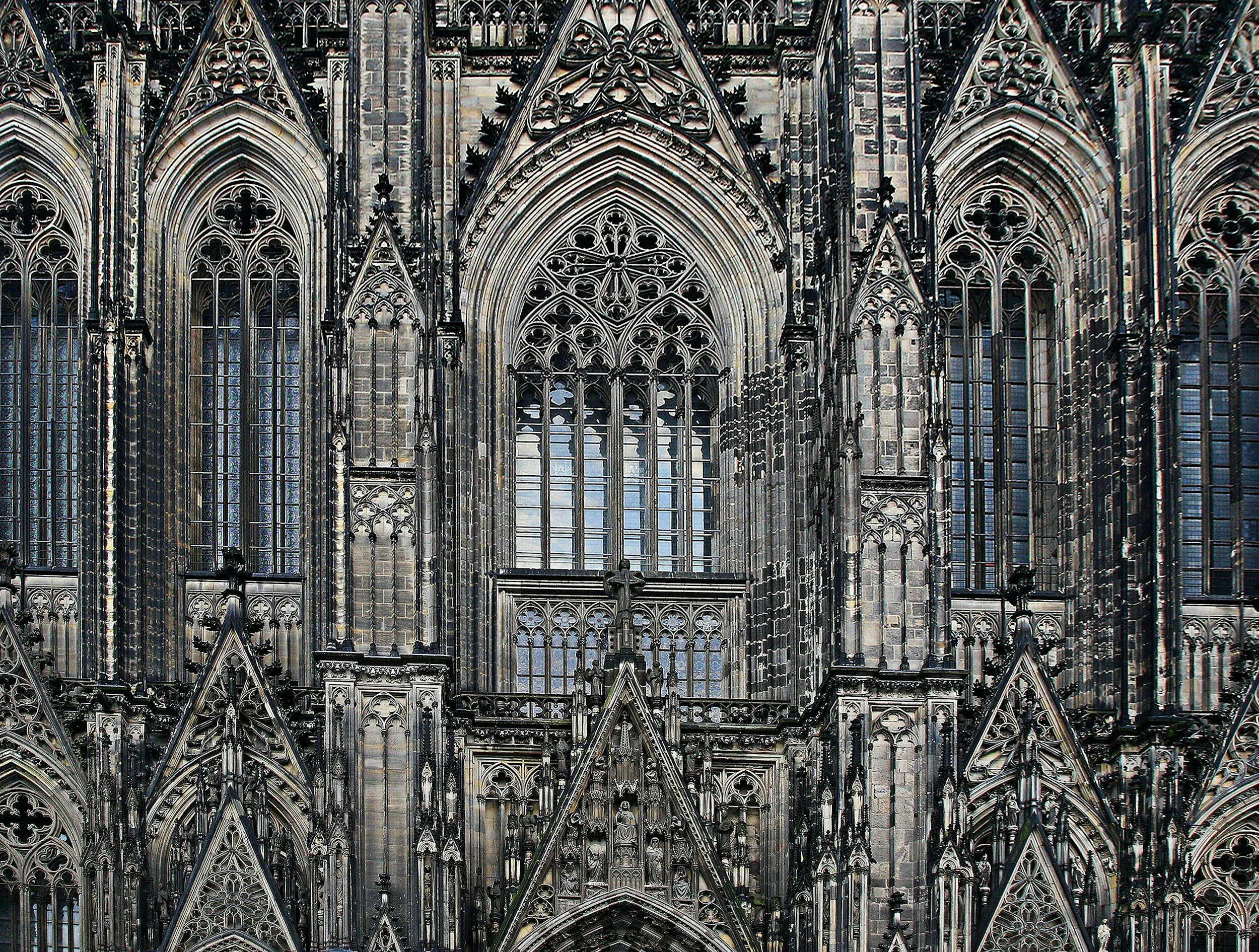
If you’ve read anything about Classical Education, you will have come across the concept of the Trivium. It is not intended to be pretentious or obscure. It simply sets out structure for formal education. It is in harmony with the concept that all things possess a natural order. If education is to form the whole person, it must possess structure.
Formation does not occur accidentally. The human mind develops in stages, and these stages are not random and inconsistent. Reason matures gradually. Expression deepens through disciplined learning. Without an architecture to guide this development, education can become highly fragmented and left to chance—and stall without any real progress or ultimate coherence.
The classical tradition understood this, and deliberately structures itself around the natural development of its students' developing mind. It’s goal is to organize learning according to the natural development of the intellect rather than simply accumulating subjects.
That architecture is known as the Trivium.
The Meaning of the Trivium
The word Trivium simply means “the three ways” or “the three roads.” Though the Greeks laid the foundation for classical education, the Romans systematized it, and the scholar Marcus Terentius Varro coined the term, which itself became standard in the medieval period. It refers to the foundational arts of:
Grammar
Logic
Rhetoric
Together, these form the intellectual “spine” of classical education.
They are not subjects, they are intended as modes of learning—frameworks that shape how a student receives, processes, and communicates concepts and ideas.
Classical Education is premised on the belief that before a student can master disciplines, they must first master certain tools of thought.
Grammar: Laying the Foundation
The grammar stage concerns knowledge—facts, language, structure, and order (chronological, alphabetical, historical sequence, narrative sequence etc.).
At this stage, students memorize, categorize, and internalize foundational material. They learn vocabulary, historical timelines, mathematical operations, definitions, and the basic structure of language. This is not rote learning for its own sake; it is intellectual formation - and at this stage in their development, children love it and can soak it up.
A mind without stored knowledge cannot reason effectively, and can have no true clarity. It cannot recognize patterns, analogies, or contradictions. Grammar provides the raw material from which understanding is later constructed.
In this stage, precision of language is particularly important. Words are the instruments of thought. If language is imprecise, thinking will be imprecise.
Grammar, properly understood, forms attentiveness and discipline.
Logic: Ordering the Mind
The intent of the grammar stage is to provide material, and the logic stage intends to order that received material.
In the logic stage, students learn to analyze arguments, identify fallacies, distinguish cause from correlation, and test propositions for coherence. Students should begin to ask not only what is true, but why it is true.
This stage corresponds to the natural awakening of critical faculties. The questioning impulse that so naturally arises at this stage in human development, is honed, disciplined and refined.
Classical logic does not encourage cynicism and moral relativism as is so common today. It trains discernment.
Students learn to recognize contradiction, to weigh evidence, and to submit their conclusions to rational scrutiny. They discover that truth is not determined by volume, popularity, or emotion, but by coherence and reality.
Rhetoric: Articulating the True
Rhetoric is often misunderstood as mere persuasion (or even, manipulation). In the classical sense, it is the art of communicating truth beautifully and effectively.
Once students possess knowledge (grammar) and can reason soundly (logic), they must learn to speak and write with clarity and confidence. Ideas that cannot be articulated cannot influence the world.
Rhetoric cultivates both eloquence and responsibility. It trains students to present arguments honestly, to appeal appropriately to emotion, and to address audiences with respect.
In the classical tradition, rhetoric was inseparable from moral character. The aim was not manipulation, but the formation of what the Romans called the good man speaking well.
Rhetoric completes the intellectual architecture by turning understanding outward into action.
Why We Emphasize the Trivium
The medieval university spoke of seven liberal arts: the Trivium (grammar, logic, rhetoric) and the Quadrivium (arithmetic, geometry, music, astronomy).
These seven arts formed the classical curriculum.
So why focus on the Trivium?
Because the Trivium forms the tools that make mastery of all other disciplines possible.
The Quadrivium concerns the order and harmony of number and creation. It is profound and indispensable. But without clarity of language, discipline of reasoning, and capacity for articulation, even mathematics and science cannot be deeply understood.
In other words: the Trivium teaches students how to learn.
Modern education often reverses this order. It introduces specialized subjects early, while neglecting the foundational arts that enable intellectual maturity. Students accumulate information without acquiring mastery of thought.
By restoring emphasis on the Trivium, we restore intellectual coherence.
This does not diminish mathematics, science, or the arts. It strengthens them by ensuring students approach them with disciplined minds.
The Trivium is Developmental not Merely Historical
It is important to note that the Trivium is not merely some medieval artifact dug up out of a sense of nostalgia for the past. It does and always has corresponded to natural stages of intellectual growth.
Children first absorb.
Then they question.
Then they express.
This progression mirrors grammar, logic, and rhetoric.
The classical model aligns education with human development rather than forcing development to conform to bureaucratic frameworks or standardized testing schedules. The aim is not rigidity, but harmony - a binding theme throughout Classical Education pedogogy.
Architecture Against Fragmentation
One of the central weaknesses of modern education is fragmentation. Subjects are isolated and compartmentalized. Students rarely see how knowledge connects.
The Trivium resists this fragmentation by integrating language, reasoning, and expression across all subjects. Grammar applies to history as much as to Latin. Logic applies to science as much as to philosophy. Rhetoric applies to literature as much as to civic life.
The architecture holds the house together.
The Aim of the Architecture
The Trivium exists to form clear thinkers.
A student trained in the Trivium:
Reads attentively
Reasons carefully
Speaks responsibly
Writes persuasively
Recognizes fallacy
Resists manipulation
Such a person is not easily swayed by ideological fashion or emotional spectacle. He possesses internal order.
And internal order is the precondition of freedom.
Recovering the Foundation
In emphasizing the Trivium, we are not reconstructing the medieval university in its entirety. We are recovering the foundation upon which serious learning rests.
Without grammar, thought collapses into confusion.
Without logic, it collapses into contradiction.
Without rhetoric, it collapses into silence.
The architecture of learning must be restored before the edifice of civilization can be renewed.
In the next entry, we will confront a sobering reality: we are attempting this recovery not at the height of cultural confidence, but among fragments. We must therefore proceed with humility—aware of what has been lost, yet determined to recover what remains possible.
Classical Education Forms a Whole Person not just a Worker
Beyond the Reduction of the Human Being
Classical education begins with a fundamentally unmodern premise: the human being is not merely a future worker, activist or even citizen, but a person—possessing intellect, will, imagination, conscience, and a capacity for transcendence. Education worthy of the name must address the whole of this reality.
To form only the intellect without moral character is to produce cleverness without wisdom. To emphasize skills without judgment is to train efficiency without direction. Classical education resists these reductions by insisting that education concerns the whole person: mind, body, and soul.
The Human Person as Rational and Moral
The Western tradition has consistently understood the human being as a rational and moral creature. Reason is not an optional accessory; it is constitutive of human dignity. But reason does not operate in isolation. It is shaped by habits, loves, and moral orientation.
For Plato, education ordered the soul so that reason governed desire, rather than being enslaved by it. Knowledge alone was insufficient; without internal harmony, the soul remained disordered.
Augustine of Hippo understood education as a reordering of love—ordo amoris—so that the soul learns to desire rightly. Formation, not mere instruction, was the goal.
Classical education inherits this anthropology. It recognizes that learning shapes not only what a student knows, but what a student values.
Encountering the Great Questions
A central feature of classical education is its refusal to shield students from fundamental human questions.
What is justice?
What is courage?
What is a good life?
What do we owe to others—and to those who come after us?
Through sustained engagement with works such as The Odyssey or Confessions, students encounter these questions not as abstractions, but as lived realities. They witness loyalty and betrayal, pride and repentance, suffering and perseverance.
This encounter builds intellectual depth and emotional maturity. It teaches students that life is morally serious, that actions have consequences, and that wisdom is hard-won. Such formation cannot be replaced by technical proficiency or ideological instruction.
Cultural Literacy and the Shared Language of Civilization
To think clearly and communicate meaningfully within a society, one must share a common cultural vocabulary.
E. D. Hirsch described this as cultural literacy: the reservoir of shared knowledge, references, and ideas that allow a people to understand one another and participate fully in civic and intellectual life.
A person who lacks this shared inheritance is not merely uninformed; he is excluded—from history, from public discourse, and from the deeper layers of meaning embedded in language itself. Ultimately, he is lost in time wandering formless space.
Classical education takes this seriously. It seeks to induct students into the cultural conversation of the West so that they can understand what they read, hear, and inherit. This is not elitism. It is inclusion into a tradition that once belonged to all educated citizens.
Joining the Great Conversation
Systematic study within the classical tradition allows the student to enter what Mortimer J. Adler called the Great Conversation—the ongoing dialogue among the greatest minds across centuries.
This conversation is not about agreement. It is about engagement. Plato argues with Aristotle; Augustine challenges the pagans; Aquinas synthesizes faith and reason; later thinkers respond, refine, and dissent.
The student formed within this conversation learns intellectual humility. He discovers that his own moment is neither uniquely enlightened nor uniquely corrupt. He learns to listen before speaking, to argue without caricature, and to recognize wisdom wherever it appears.
Such formation produces not dogmatism, but depth.
Mind, Body, and Discipline
The Greeks understood that physical discipline supported moral and intellectual discipline. The body, like the mind, requires training. Order in one supports order in the other.
Modern education often neglects this unity. Students are encouraged to express themselves freely while being deprived of structure, limits, and meaningful challenge. Classical education restores balance by recognizing that freedom grows through discipline, not in its absence.
Habits of attention, perseverance, and restraint are cultivated over time. These habits form the foundation of both intellectual excellence and personal responsibility.
Education as Preparation for Life, Not Escape From It
To form the whole person is not to retreat from reality, but to prepare for it.
A student educated classically is not insulated from difficulty. On the contrary, he is better equipped to face it. He has encountered suffering in literature, tragedy in history, and moral complexity in philosophy. He has learned that life is demanding—and that meaning is found not in avoidance, but in engagement.
Such formation fosters resilience, humility, and purpose. It prepares individuals not merely to succeed, but to endure—to live well under conditions that are often imperfect.
Against Fragmentation
The fragmentation of modern education mirrors the fragmentation of modern life. Subjects are isolated, knowledge is compartmentalized, and students are rarely invited to see how truth fits together.
Classical education resists this by seeking integration. Literature illuminates history; philosophy clarifies theology; rhetoric disciplines thought; mathematics reveals order. The student begins to perceive coherence where before there was only accumulation.
This integrated vision is essential to forming a whole person. Without it, education produces specialists who know much about little and little about what matters most.
Formation as an Act of Hope
To educate the whole person is an act of hope.
It assumes that human beings have inherent value, are capable of truth, that virtue is attainable, and that civilization is worth preserving. It rejects cynicism and despair without resorting to naïveté.
Classical education does not promise to produce perfect individuals. It promises something more modest and more important: human beings oriented toward truth, formed in judgment, and capable of living responsibly within the inheritance they receive.
In the next entry, we will turn to the structure that makes such formation possible—the Trivium—and examine how grammar, logic, and rhetoric shape the mind over time into clarity, coherence, and eloquence.
Education as Moral Formation
Education Is Never Morally Neutral
Modern education presents itself as neutral—concerned with skills, competencies, and information, typically avoiding judgments about moral right and wrong. This posture is reassuring in theory and misleading in practice.
Education is inherently formative. Every curriculum, every selection of texts, every pedagogical method shapes the moral imagination of the student. The decision to withhold moral judgment also communicates a value judgment: that all beliefs are provisional, that conviction is suspect, and that moral clarity is either impossible, dangerous or even harmful.
Classical education rejects this fiction of neutrality. It begins from the recognition that young people are moral beings long before they are autonomous thinkers. They are constantly being habituated—by stories, examples, language, and expectations—toward certain loves and away from others. The only real question is whether that formation will be coherent and intentional, or incoherent and accidental.
The Classical Understanding of Moral Formation
In the classical tradition, education was never reduced to the transfer of information. It was understood as the shaping of character.
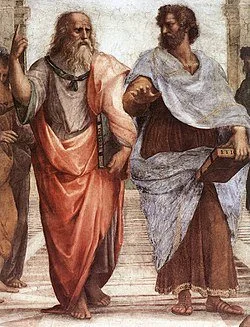
Plato argued that education should train the soul to love what is noble and to hate what is base. This was not accomplished through abstract moralizing, but through immersion in music, poetry, physical discipline, and philosophy—each ordered toward harmony within the person.
For Aristotle, moral formation was inseparable from habit. Virtue was not merely known; it was practiced. Education, therefore, had to train both reason and desire, so that the student learned not only what is good, but learned to want what is good.
This insight remains decisive. Knowledge without character does not elevate; it amplifies whatever moral orientation already exists.
Standards of the Good, the True, and the Beautiful
Classical education rests on a further conviction that is deeply countercultural in the modern West: what is good, what is true, and what is beautiful are objective realities.
Taste is not merely arbitrary. Reason is not merely instrumental. Beauty is not, in fact, “in the eye of the beholder”. These standards exist independently of individual opinion, and education aims to align the student’s judgment with them over time.
Young people today are particularly in need of such standards. In a culture saturated with novelty, distraction, and relativism, they are rarely taught how to discriminate—how to recognize excellence, coherence, depth, and moral weight. Without standards, freedom becomes paralysis, and choice becomes anxiety.
Classical education offers formation in judgment by exposing students to works that have endured precisely because they meet these standards. Not everything old is good, but what is truly great cannot be understood apart from time, tradition, and disciplined attention.
Stories That Form the Soul
Moral formation is not primarily abstract. It is narrative.
Classical education understands that stories shape conscience more powerfully than rules alone. Through literature and history, students encounter models of courage and cowardice, loyalty and betrayal, pride and humility.
The rage of Achilles reveals the cost of unchecked passion. Aeneas embodies duty to family, gods, and future generations. Socrates demonstrates fidelity to truth even unto death. These are not moral lessons delivered as slogans; they are lived realities presented for contemplation and imitation.
Such encounters invite self-examination. They ask not merely “What is right?” but “Who am I becoming?” Over time, this forms a moral compass grounded in experience rather than abstraction.
Why Virtue Cannot Be Outsourced
Modern education often treats character formation as either a private matter or a peripheral concern. Schools may speak vaguely of “values” while hesitating to articulate what those values are or why they matter.
Classical education takes the opposite view. It insists that moral formation cannot be outsourced to chance, peer culture, or bureaucratic policy. If education does not intentionally cultivate virtue, something else will cultivate vice.
This does not require rigid moralism or ideological enforcement. It requires clarity about human goods, humility about human weakness, and patience with the slow work of formation.
Virtue is not imposed; it is cultivated. And cultivation requires time, example, and deliberate practice.
Education Ordered Toward Responsibility
The aim of moral formation is not conformity, but responsibility.
A person formed by classical education is not merely obedient, but self-governing. He possesses the internal order necessary for freedom. He can reason about ends, restrain impulse, and act with deliberation.
Such formation is essential not only for personal flourishing, but for civic life. Free societies depend on citizens capable of moral judgment. When education abandons virtue, it undermines the very conditions that make freedom possible.
Classical education understood this. It sought to form individuals capable of living well, ruling themselves, and contributing responsibly to the communities they inherit.
Formation Before Reform
Education that neglects moral formation inevitably turns toward external reform—political, social, or technological—as a substitute for internal order. But no society can be repaired solely from the outside.
Classical education begins where all lasting renewal begins: with the formation of the person.
It does not promise perfection. It does not deny human frailty. But it insists that education worthy of the name must concern itself with who we are becoming, not merely what we can do.
In the next entry, we will turn to the idea of forming the whole person—mind, body, and soul—and examine why classical education has always resisted the reduction of human beings to economic units or test scores.
The Classical Tradition: The Founding
Classical education is not an abstract or unproven theory. It arose organically from the civilizations that first asked, in a sustained and serious way, what it means to live well.
Its origins lie in ancient Greece, where education was understood as the cultivation of the soul through reason, beauty, and moral formation. The Greeks did not separate education from character. Poetry, music, physical training, philosophy, and rhetoric were ordered toward producing free men capable of self-government and civic responsibility. Homer, Hesiod, Plato, and Aristotle were not studied for information alone, but for formation. This was the first people to systematically seek the highest good.
Rome inherited this Greek tradition almost wholesale. Roman education refined Greek philosophy with an emphasis on law, rhetoric, and public service. The Roman ideal was not the detached thinker, but the vir bonus dicendi peritus—the good man skilled in speaking. Cicero’s synthesis of philosophy and rhetoric became the model for education for centuries, shaping statesmen, lawyers, and citizens alike.
This classical inheritance did not disappear with the fall of Rome. During the Middle Ages, it survived in monasteries, cathedral schools, and early universities. Christian thinkers did not discard the classical tradition; they baptized it. Augustine, Boethius, and later Aquinas integrated Greek philosophy with Christian theology, preserving the liberal arts as a preparation for higher wisdom. Grammar, logic, and rhetoric—the Trivium—became the intellectual spine of Western education.
The Renaissance recovered and refined classical sources. Greek and Roman texts were studied anew in their original languages. Education once again emphasized eloquence, history, moral philosophy, and the formation of judgment. This humanist revival restored confidence in the capacity of education to shape both intellect and character.
From Italy, the classical tradition passed to England, where it became deeply embedded in grammar schools and universities. Latin and Greek were the foundation of serious education. Students learned to think, argue, and write by immersion in the best models of language and thought Western civilization had produced.
It was this English classical inheritance that crossed the Atlantic. In colonial America and at the time of the founding of the United States, classical education was still thriving. Greek and Latin were central to early adolescence. History, rhetoric, and moral philosophy shaped the intellectual formation of leaders. Thomas Jefferson strongly recommended the study of Greek and Latin as essential to forming judgment and taste. The Founding Fathers of the United States were practical men whose education had given them historical perspective and moral vocabulary.
One of their most cherished books was Plutarch’s Lives of the Noble Greeks and Romans. These biographies served as moral instruction. They offered concrete examples of virtue and vice, ambition and restraint, honor and corruption.
Eighteenth-century Americans trusted George Washington in part because he consciously embodied a classical ideal.
Like Cincinnatus, the Roman farmer-statesman, Washington relinquished power when his duty was complete. His authority rested on both success and character—today, we understand success, but character is an idea intelligible only within a classical moral framework.
This is an important point: classical education was not marginal at the founding of the modern West. It was normative. It supplied the language, the historical analogies, and the moral assumptions that undergirded constitutional government, the rule of law, and ordered liberty.
The decline of classical education represents not progress but rupture. When the tradition weakened, so too did the shared cultural language that once allowed citizens to reason together about justice, duty, and the common good. Education gradually shifted from formation to function, from inheritance to innovation, from wisdom to technique.
To recover classical education is not to retreat into the past. It is to reconnect with the intellectual and moral roots that made the West intelligible to itself. A civilization that forgets how it was formed cannot long sustain what it has built.
Understanding this historical continuity matters because it answers a fundamental objection: classical education is not an experiment. It is the longest-running educational tradition in Western history. Its durability is itself evidence of its effectiveness.
In the next entry, we will turn from history to substance—examining education as moral formation, and why any serious account of learning must grapple with virtue, judgment, and the formation of character.
What Is Education, and What Is It For?
The English critic and educator Matthew Arnold offered a definition of education that has not been improved upon: it is the passing on of “the best that has been thought and said in the world.”
Note what it excludes. It does not define education as training or credentialing. It does not reduce learning to utility, productivity, or employability. It assumes instead that there exists a body of knowledge, insight, and wisdom worthy of preservation for the benefit of the recipient—and that education is the means by which that inheritance is deliberately transmitted.
This assumption is no longer widely shared. Yet without it, education loses its coherence.
Education as Transmission, Not Innovation
At its core, education is an act of transmission across generations. A civilization educates not to reinvent itself each generation, but to preserve what it has learned to be true and good.
Modern education increasingly reverses this logic. It treats the past with suspicion, tradition as an obstacle to be “disrupted”, and inheritance as something to be overcome rather than received. Students are encouraged to critique before they understand, to innovate before they have mastered, and to express opinions before they possess knowledge. This is not education.
Classical education begins from the opposite premise: one must first receive before one can judge, and one must first belong before one can reform.
This is not an argument against progress. It is an argument against collective amnesia.
The Illusion of Neutral Education
Education is often presented today as morally and culturally neutral—concerned only with skills, information, or procedural competencies. This is a convenient fiction at best.
Every curriculum implies a vision of the human person. Every selection of texts, every omission, every pedagogical priority teaches students what matters and what does not. Even the decision to avoid moral judgment is itself a moral stance.
Classical education rejects the pretense of neutrality. It acknowledges that education is inherently formative. Young people are not blank slates; they are moral and social beings in the process of becoming. They are constantly being habituated—toward certain loves, and prejudices, certain ideals, and certain conceptions of the good life.
The question is whether that formation will be intentional and rooted in wisdom, or accidental and shaped by wims or fashion.
Why the “Best” Matters
Arnold’s phrase—the best that has been thought and said—rests on a further claim: that not all ideas are equal. If they were, you wouldn’t need any.
The classical tradition unapologetically maintains standards. It distinguishes between what is enduring and what is ephemeral, between insight and novelty, between excellence and mediocrity. It does not deny that new works can be great, but it insists that greatness must be tested against time, reason, and moral weight.
The great works of the Western tradition endure not because they are old, but because they speak with unusual clarity about permanent human realities: justice and injustice, courage and cowardice, hubris and humility, order and chaos, duty and desire. They illuminate the human condition in ways that remain intelligible across centuries.
To exclude these works from education is not an act of liberation. It is an act of impoverishment.
Education and the Formation of Judgment
A properly educated person is not merely informed. He is formed in judgment.
This requires more than exposure to facts. It requires sustained engagement with serious ideas, demanding texts, and exemplary models of thought and character. It requires learning to reason logically, to speak precisely, to recognize fallacy, and to discern truth from persuasion.
Just as importantly, it requires moral orientation. Knowledge without character is not neutral; it is dangerous. History offers no shortage of technically skilled individuals whose lack of virtue proved catastrophic.
Classical education insists that intellectual development and moral formation are inseparable. It aims not merely to produce clever minds, but ordered souls.
Education in a Time of Decline
We must be candid about our moment.
We are living through a period of cultural fragmentation and confusion. Many parents now sense that something essential is missing. Schools increasingly struggle to articulate what education is for, beyond vague appeals to inclusion or social striving.
Classical education offers no quick fixes. It does not promise to solve every problem or reverse cultural decline overnight. What it offers instead is clarity of purpose.
Education exists to form human beings capable of truth, virtue, and responsible freedom. Everything else is secondary.
A Modest but Serious Aim
No individual can master the full inheritance of Western civilization. That task is beyond any one lifetime. But this does not absolve us of responsibility.
By learning even a little, we quickly grasp how much there is to know—and how much has been lost. The proper response to this realization is not despair, but humility and effort.
Our aim, then, must be modest but serious: to recover what we can, to pass on what we have received, and to hope that those who come after us will do the same.
Education, rightly understood, is an act of fidelity—to truth, to civilization, and to the generations that will inherit what we choose to preserve.
What Endures in culture and learning?
“The task of the modern educator is not to cut down jungles but to irrigate deserts.”
— C.S. Lewis
The return of classical education comes at an opportune—and necessary—time.
Across the Western world, parents and educators increasingly recognize that the modern education system has failed in its most fundamental task: the formation of virtuous, discerning and disciplined young citizens with a sense of shared culture and tradition. In place of intellectual depth, moral formation, and cultural inheritance, students are offered a fragmented curriculum, progressive trends, and a narrowing conception of education as mere job training.
Classical education represents a deliberate and necessary alternative. It is not trendy. It is not novel. It is a return—to what is proven, and worthy of transmission.
Ad Altiora exists to serve that return.
A Civilization-Long Tradition
Classical education is not a theory or innovation. It is the most successful and long-lasting educational tradition in human history.
It emerged in ancient Greece, was adopted, refined and systematized by the Romans, preserved imperfectly and enriched through the Middle Ages, and brought to renewed excellence during the Renaissance. From there, it passed to England and, through colonial inheritance, to the United States, Canada, and Australia. The Canadian national motto, “A Mari Usque ad Mare”, drawn from Psalm 72:8, confidently promoted Canada’s inheritance, Roman and Christian.
A century earlier, at the time of the American founding, classical education was not a counter-cultural alternative—it was both the norm and ideal. Greek and Latin were central to early education. Plutarch’s Lives shaped the moral imagination of statesmen. George Washington was trusted in part because Americans recognized in him the Roman ideal of Cincinnatus: the citizen-soldier who relinquishes power once duty is fulfilled.
This tradition was never just academic. It aimed at forming human beings capable of reason, virtue, and civic responsibility.
At its best, classical education:
Values knowledge for its own sake
Upholds standards of morality, logic, beauty, and coherence
Demands moral formation alongside intellectual development
Prepares free citizens for responsible participation in the political order
These aims are not irrelevant today. They are only absent—and much needed.
The Purpose of Education
Matthew Arnold famously described education as the passing on of “the best that has been thought and said in the world.” Education is not primarily about credentials or conformity to the present moment. It is the inheritance of knowledge, wisdom and tradition and the formation of virtuous moral agents. A civilization survives only if it deliberately transmits its intellectual and moral achievements to the next generation.
Today, that transmission has more or less ended.
In an era marked by cultural degeneration, many parents now understand a difficult truth: without conscious effort, the inheritance of Western civilization will not survive intact. What replaces it will be less humane, less beautiful, and less capable of sustaining free societies.
Classical education is not about reverence for the past because it is old. The great works endure because they speak with clarity and depth about permanent human realities—justice, courage, pride, duty, love, suffering, and transcendence.
They teach us not what to think, but how to think—and how to live.
Education as Moral Formation
Education is never morally neutral.
Young people are constantly placed in moral situations. Every curriculum implicitly teaches what is worthy of imitation and pursuit. The question is not whether character will be formed, but which character will be formed.
Plato understood this clearly. For him, education habituated the young to love what is noble and to reject what is base. Music, poetry, physical training, and disciplined study elevated the soul toward harmony and order.
Aristotle went further, insisting that education must form virtuous citizens rooted in the traditions and laws of their society. Knowledge divorced from virtue was not only incomplete—it was dangerous.
Classical education accepts this proposition. It insists that truth, goodness, and beauty are objective realities, not matters of preference. As soon as an educator says “this is right” and “this is wrong,” character is being taught. The only question is whether that teaching is deliberate, coherent, and rooted in wisdom—or accidental and incoherent.
Among the Ruins
We must be honest about our situation.
We are not heirs standing at the height of a flourishing culture. We are custodians among ruins.
The common culture that once sustained classical education no longer exists. We obviously do not have a Plato, an Augustine, Dante or a Leonardo da Vinci among us. We lack not only the giants, but also the cultural fluency required to understand them. It is difficult to pass on what we ourselves possess only in shattered fragments.
Virtues such as courage, self-denial, humility, perseverance, and magnanimity cannot be transmitted by books alone. They require living examples that are lifted up by a common culture.
And yet, abandonment is not an option.
Education is the passing of a torch, and the number of torchbearers has grown thin. Still, all is not lost. We cannot reconstruct what has been shattered—but we can recover much. We can gather the fragments. We can rebuild enough to pass something real to the next generation.
This work requires humility and resolve.
Why Ad Altiora
Ad Altiora means toward higher things.
This project exists to make classical education more accessible, more intelligible, and more grounded for parents and educators who sense its importance but feel overwhelmed by complexity, cost, or fragmentation.
Classical education today is often burdened by sprawling curricula and intimidating systems. Yet its core materials—the great texts of Western civilization—are more accessible than ever. Many are in the public domain. Others are inexpensive. The real challenge is not access to books, but clarity of purpose and guidance in their use.
Ad Altiora begins here: with first principles, with humility among the ruins, and with a commitment to recover what can still be recovered.
The work will proceed gradually and deliberately.