
Education as Moral Formation
Education Is Never Morally Neutral
Modern education presents itself as neutral—concerned with skills, competencies, and information, typically avoiding judgments about moral right and wrong. This posture is reassuring in theory and misleading in practice.
Education is inherently formative. Every curriculum, every selection of texts, every pedagogical method shapes the moral imagination of the student. The decision to withhold moral judgment also communicates a value judgment: that all beliefs are provisional, that conviction is suspect, and that moral clarity is either impossible, dangerous or even harmful.
Classical education rejects this fiction of neutrality. It begins from the recognition that young people are moral beings long before they are autonomous thinkers. They are constantly being habituated—by stories, examples, language, and expectations—toward certain loves and away from others. The only real question is whether that formation will be coherent and intentional, or incoherent and accidental.
The Classical Understanding of Moral Formation
In the classical tradition, education was never reduced to the transfer of information. It was understood as the shaping of character.
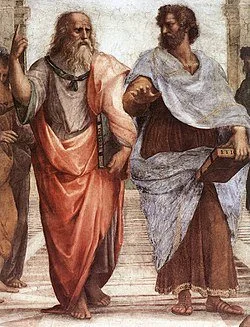
Plato argued that education should train the soul to love what is noble and to hate what is base. This was not accomplished through abstract moralizing, but through immersion in music, poetry, physical discipline, and philosophy—each ordered toward harmony within the person.
For Aristotle, moral formation was inseparable from habit. Virtue was not merely known; it was practiced. Education, therefore, had to train both reason and desire, so that the student learned not only what is good, but learned to want what is good.
This insight remains decisive. Knowledge without character does not elevate; it amplifies whatever moral orientation already exists.
Standards of the Good, the True, and the Beautiful
Classical education rests on a further conviction that is deeply countercultural in the modern West: what is good, what is true, and what is beautiful are objective realities.
Taste is not merely arbitrary. Reason is not merely instrumental. Beauty is not, in fact, “in the eye of the beholder”. These standards exist independently of individual opinion, and education aims to align the student’s judgment with them over time.
Young people today are particularly in need of such standards. In a culture saturated with novelty, distraction, and relativism, they are rarely taught how to discriminate—how to recognize excellence, coherence, depth, and moral weight. Without standards, freedom becomes paralysis, and choice becomes anxiety.
Classical education offers formation in judgment by exposing students to works that have endured precisely because they meet these standards. Not everything old is good, but what is truly great cannot be understood apart from time, tradition, and disciplined attention.
Stories That Form the Soul
Moral formation is not primarily abstract. It is narrative.
Classical education understands that stories shape conscience more powerfully than rules alone. Through literature and history, students encounter models of courage and cowardice, loyalty and betrayal, pride and humility.
The rage of Achilles reveals the cost of unchecked passion. Aeneas embodies duty to family, gods, and future generations. Socrates demonstrates fidelity to truth even unto death. These are not moral lessons delivered as slogans; they are lived realities presented for contemplation and imitation.
Such encounters invite self-examination. They ask not merely “What is right?” but “Who am I becoming?” Over time, this forms a moral compass grounded in experience rather than abstraction.
Why Virtue Cannot Be Outsourced
Modern education often treats character formation as either a private matter or a peripheral concern. Schools may speak vaguely of “values” while hesitating to articulate what those values are or why they matter.
Classical education takes the opposite view. It insists that moral formation cannot be outsourced to chance, peer culture, or bureaucratic policy. If education does not intentionally cultivate virtue, something else will cultivate vice.
This does not require rigid moralism or ideological enforcement. It requires clarity about human goods, humility about human weakness, and patience with the slow work of formation.
Virtue is not imposed; it is cultivated. And cultivation requires time, example, and deliberate practice.
Education Ordered Toward Responsibility
The aim of moral formation is not conformity, but responsibility.
A person formed by classical education is not merely obedient, but self-governing. He possesses the internal order necessary for freedom. He can reason about ends, restrain impulse, and act with deliberation.
Such formation is essential not only for personal flourishing, but for civic life. Free societies depend on citizens capable of moral judgment. When education abandons virtue, it undermines the very conditions that make freedom possible.
Classical education understood this. It sought to form individuals capable of living well, ruling themselves, and contributing responsibly to the communities they inherit.
Formation Before Reform
Education that neglects moral formation inevitably turns toward external reform—political, social, or technological—as a substitute for internal order. But no society can be repaired solely from the outside.
Classical education begins where all lasting renewal begins: with the formation of the person.
It does not promise perfection. It does not deny human frailty. But it insists that education worthy of the name must concern itself with who we are becoming, not merely what we can do.
In the next entry, we will turn to the idea of forming the whole person—mind, body, and soul—and examine why classical education has always resisted the reduction of human beings to economic units or test scores.
