
Classical Education, the Trivium, and the Architecture of Learning
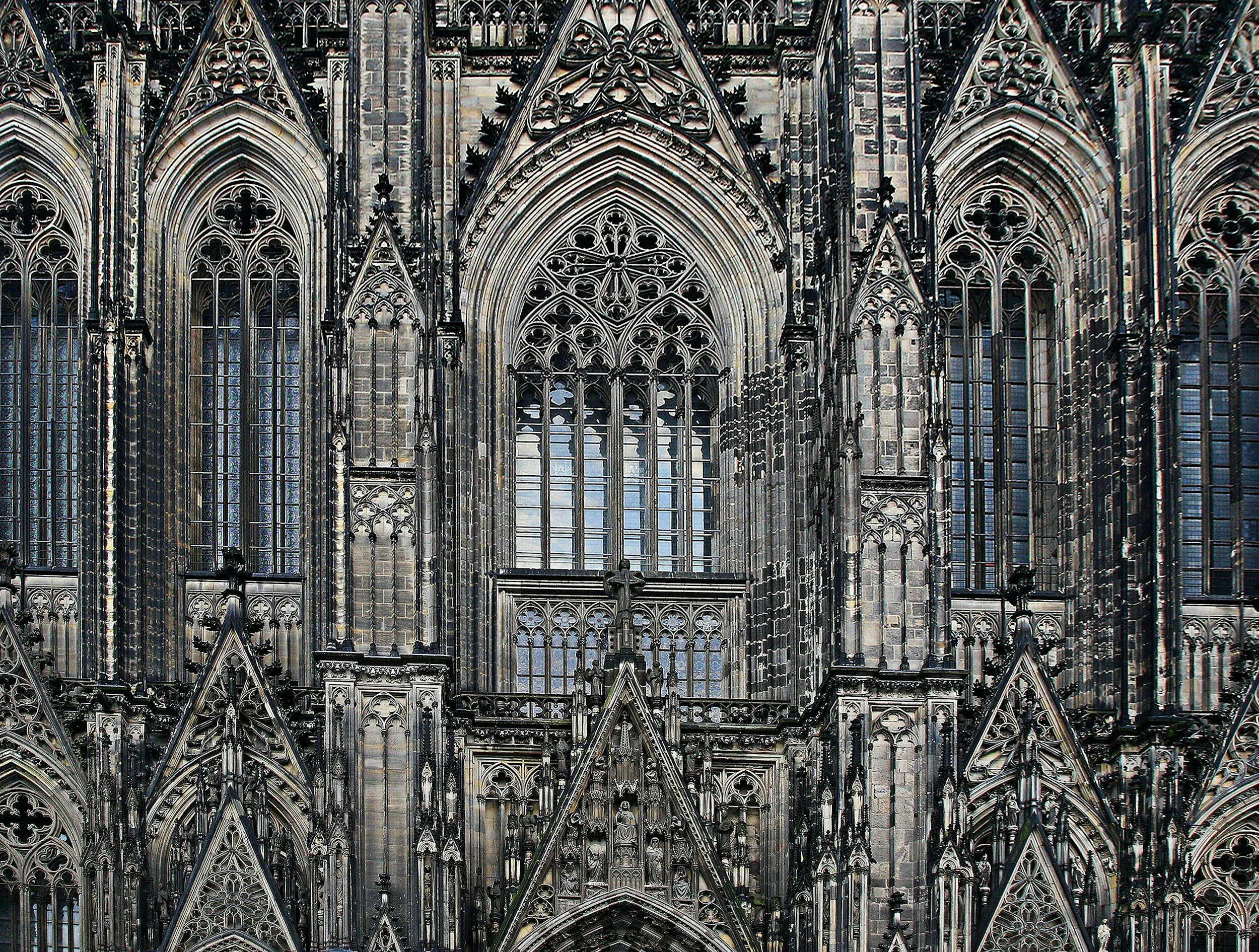
Why Structure Matters
If you’ve read anything about Classical Education, you will have come across the concept of the Trivium. It is not intended to be pretentious or obscure. It simply sets out structure for formal education. It is in harmony with the concept that all things possess a natural order. If education is to form the whole person, it must possess structure.
Formation does not occur accidentally. The human mind develops in stages, and these stages are not random and inconsistent. Reason matures gradually. Expression deepens through disciplined learning. Without an architecture to guide this development, education can become highly fragmented and left to chance—and stall without any real progress or ultimate coherence.
The classical tradition understood this, and deliberately structures itself around the natural development of its students' developing mind. It’s goal is to organize learning according to the natural development of the intellect rather than simply accumulating subjects.
That architecture is known as the Trivium.
The Meaning of the Trivium
The word Trivium simply means “the three ways” or “the three roads.” Though the Greeks laid the foundation for classical education, the Romans systematized it, and the scholar Marcus Terentius Varro coined the term, which itself became standard in the medieval period. It refers to the foundational arts of:
Grammar
Logic
Rhetoric
Together, these form the intellectual “spine” of classical education.
They are not subjects, they are intended as modes of learning—frameworks that shape how a student receives, processes, and communicates concepts and ideas.
Classical Education is premised on the belief that before a student can master disciplines, they must first master certain tools of thought.
Grammar: Laying the Foundation
The grammar stage concerns knowledge—facts, language, structure, and order (chronological, alphabetical, historical sequence, narrative sequence etc.).
At this stage, students memorize, categorize, and internalize foundational material. They learn vocabulary, historical timelines, mathematical operations, definitions, and the basic structure of language. This is not rote learning for its own sake; it is intellectual formation - and at this stage in their development, children love it and can soak it up.
A mind without stored knowledge cannot reason effectively, and can have no true clarity. It cannot recognize patterns, analogies, or contradictions. Grammar provides the raw material from which understanding is later constructed.
In this stage, precision of language is particularly important. Words are the instruments of thought. If language is imprecise, thinking will be imprecise.
Grammar, properly understood, forms attentiveness and discipline.
Logic: Ordering the Mind
The intent of the grammar stage is to provide material, and the logic stage intends to order that received material.
In the logic stage, students learn to analyze arguments, identify fallacies, distinguish cause from correlation, and test propositions for coherence. Students should begin to ask not only what is true, but why it is true.
This stage corresponds to the natural awakening of critical faculties. The questioning impulse that so naturally arises at this stage in human development, is honed, disciplined and refined.
Classical logic does not encourage cynicism and moral relativism as is so common today. It trains discernment.
Students learn to recognize contradiction, to weigh evidence, and to submit their conclusions to rational scrutiny. They discover that truth is not determined by volume, popularity, or emotion, but by coherence and reality.
Rhetoric: Articulating the True
Rhetoric is often misunderstood as mere persuasion (or even, manipulation). In the classical sense, it is the art of communicating truth beautifully and effectively.
Once students possess knowledge (grammar) and can reason soundly (logic), they must learn to speak and write with clarity and confidence. Ideas that cannot be articulated cannot influence the world.
Rhetoric cultivates both eloquence and responsibility. It trains students to present arguments honestly, to appeal appropriately to emotion, and to address audiences with respect.
In the classical tradition, rhetoric was inseparable from moral character. The aim was not manipulation, but the formation of what the Romans called the good man speaking well.
Rhetoric completes the intellectual architecture by turning understanding outward into action.
Why We Emphasize the Trivium
The medieval university spoke of seven liberal arts: the Trivium (grammar, logic, rhetoric) and the Quadrivium (arithmetic, geometry, music, astronomy).
These seven arts formed the classical curriculum.
So why focus on the Trivium?
Because the Trivium forms the tools that make mastery of all other disciplines possible.
The Quadrivium concerns the order and harmony of number and creation. It is profound and indispensable. But without clarity of language, discipline of reasoning, and capacity for articulation, even mathematics and science cannot be deeply understood.
In other words: the Trivium teaches students how to learn.
Modern education often reverses this order. It introduces specialized subjects early, while neglecting the foundational arts that enable intellectual maturity. Students accumulate information without acquiring mastery of thought.
By restoring emphasis on the Trivium, we restore intellectual coherence.
This does not diminish mathematics, science, or the arts. It strengthens them by ensuring students approach them with disciplined minds.
The Trivium is Developmental not Merely Historical
It is important to note that the Trivium is not merely some medieval artifact dug up out of a sense of nostalgia for the past. It does and always has corresponded to natural stages of intellectual growth.
Children first absorb.
Then they question.
Then they express.
This progression mirrors grammar, logic, and rhetoric.
The classical model aligns education with human development rather than forcing development to conform to bureaucratic frameworks or standardized testing schedules. The aim is not rigidity, but harmony - a binding theme throughout Classical Education pedogogy.
Architecture Against Fragmentation
One of the central weaknesses of modern education is fragmentation. Subjects are isolated and compartmentalized. Students rarely see how knowledge connects.
The Trivium resists this fragmentation by integrating language, reasoning, and expression across all subjects. Grammar applies to history as much as to Latin. Logic applies to science as much as to philosophy. Rhetoric applies to literature as much as to civic life.
The architecture holds the house together.
The Aim of the Architecture
The Trivium exists to form clear thinkers.
A student trained in the Trivium:
Reads attentively
Reasons carefully
Speaks responsibly
Writes persuasively
Recognizes fallacy
Resists manipulation
Such a person is not easily swayed by ideological fashion or emotional spectacle. He possesses internal order.
And internal order is the precondition of freedom.
Recovering the Foundation
In emphasizing the Trivium, we are not reconstructing the medieval university in its entirety. We are recovering the foundation upon which serious learning rests.
Without grammar, thought collapses into confusion.
Without logic, it collapses into contradiction.
Without rhetoric, it collapses into silence.
The architecture of learning must be restored before the edifice of civilization can be renewed.
In the next entry, we will confront a sobering reality: we are attempting this recovery not at the height of cultural confidence, but among fragments. We must therefore proceed with humility—aware of what has been lost, yet determined to recover what remains possible.
